





















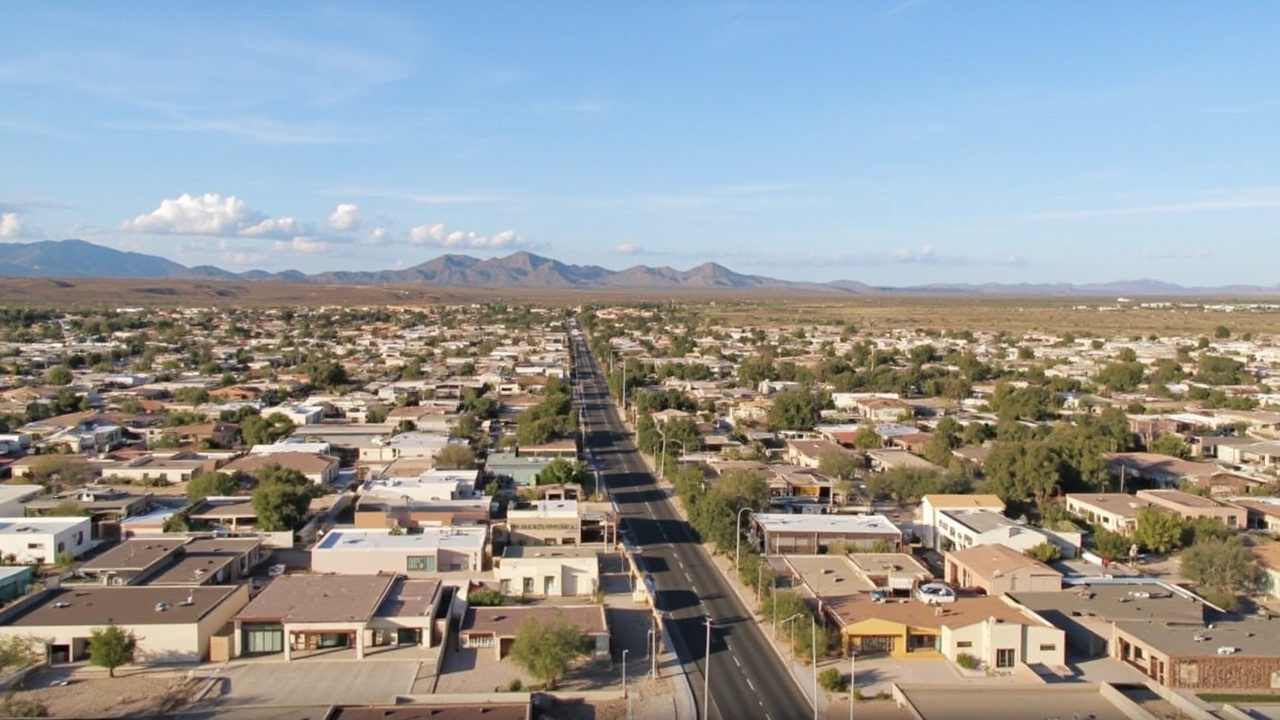

San Tan Valley opened its doors in September 2025 with 104,000 residents but none of the usual municipal machinery. According to Propmodo, Arizona’s biggest incorporation now faces a practical question: can it build services, infrastructure and a stable tax base before growth outruns its finances?
For property investors, the issue extends beyond residential expansion. Industrial, retail and energy projects could eventually broaden the town’s commercial tax base. Their prospects depend on public infrastructure, administrative capacity and whether planned development becomes funded construction.
The facts behind the rapid launch
- San Tan Valley entered the map as a municipality in September 2025, giving 104,000 residents a new local government.
- It is the largest municipal incorporation in Arizona history.
- The town covered its first ten months of operations with cash borrowed from neighboring Queen Creek.
- Brent Billingsley became the inaugural employee in December 2025.
- Billingsley built a 15-person team that reached full administrative independence on July 1, 2026.
- Revenue collected during the first year came to approximately $51 million.
The scale of the population made the administrative gaps obvious. The municipality had no initial workforce, established infrastructure or immediate access to tax collections. It also lacked basic systems that most cities treat as permanent fixtures.
Its interim arrangements show how quickly it had to move. Space came from Pinal County, emergency response was handled through the county sheriff and Rural Metro Fire, and operating money came from Queen Creek.
Federal and state approvals were needed before San Tan Valley could receive the money flowing through state revenue-sharing arrangements. Those receipts remain its main source of income, joined by a transaction privilege tax that began October 1.
A spending limit with investment consequences
On November 3, residents will decide whether to raise the town’s state-controlled ceiling from $91 million to $850 million. The higher figure provides room for eventual growth; it does not mean the full amount will be spent immediately.
Neighboring Queen Creek works within a $650 million ceiling despite having fewer residents. That comparison puts San Tan Valley’s proposed limit in context. It signals expectations for a much larger future municipal operation.
A ten-year general plan now being prepared identifies several spending priorities: buying land, constructing a town hall, adding parks and widening roads. These choices will shape commercial property demand as the community expands.
Road capacity matters for distribution and logistics. Parks and public facilities can influence where private development gains traction. Land purchases may also affect which sites remain available to builders and investors.
Commercial real estate has to widen the tax base
San Tan Valley’s leaders want to move beyond its bedroom-community reputation. Mayor Daren Schnepf and Billingsley are courting industrial and commercial occupants, partly to reduce the sales tax leaving the municipality for neighboring cities.
About 600 companies currently operate across the town, which contains between 37,000 and 39,491 homes. Openings by Winco Foods and In-N-Out Burger suggest that commercial demand is beginning to form, although the mix remains heavily residential.
Energy infrastructure offers another route forward. Approval has been granted for a battery storage project, while officials are visiting data centers to brief the council on potential energy-related developments.
Neither item establishes a completed investment. A storage approval is not proof of construction, and a data-center tour does not guarantee a tenant or final capital commitment. Investors still need to examine power availability, required infrastructure, permitting and the municipality’s prospective tax receipts.
A checklist for property investors
Say you are evaluating a retail or industrial opportunity serving San Tan Valley’s expanding population. Do not underwrite the residential growth alone and assume it will support every commercial format.
- Compare the proposal with the town’s existing business mix rather than its household count.
- Identify which roads, utilities and public facilities must arrive first.
- Separate approved projects from early-stage concepts and tours.
- Test whether the tenant generates enough taxable activity for the location.
- Compare potential returns with competing properties in established nearby cities.
This approach also distinguishes essential commercial demand from discretionary spending. Food retail and basic services may establish an early customer base. More ambitious formats still need evidence that households, employers and visitor spending can support them.
What to watch next
The November 3 vote is the first major checkpoint. A higher spending ceiling would give San Tan Valley greater capacity to prepare infrastructure and public services as demand increases. It would not, by itself, prove that the commercial tax base is ready.
Officials from Queen Creek, Casa Grande and Maricopa have urged patience, noting that major developments can require years before they produce meaningful results. Their caution matches the administrative work already completed: San Tan Valley has built a government quickly, but its financial independence still depends on converting household growth into stable revenue.
For investors, the useful signals are revenue mix, infrastructure spending, business openings and actual project delivery. Population headlines came first. The commercial property case must follow.
Key takeaways
- Population growth expands potential tax income while also increasing the cost of roads, public safety and municipal services.
- State revenue-sharing remains central even after the new transaction privilege tax began operating.
- Industrial, retail and energy projects could diversify the town’s tax base, but only if proposals reach funded construction.
- Underwriting should reflect current business demand rather than residential growth alone.
Frequently asked questions
Why was San Tan Valley’s administrative launch unusual?
It became a municipality with 104,000 residents but had no workforce, infrastructure or immediate access to tax collections. It relied on Queen Creek for temporary operating funds while establishing its own government.
What will the November 3 vote decide?
Voters will consider increasing the spending ceiling from $91 million to $850 million. San Tan Valley expects to use that capacity gradually as its population and responsibilities expand.
How does San Tan Valley plan to diversify its tax base?
Mayor Daren Schnepf and Brent Billingsley want more industrial and commercial tenants. A battery storage project has received approval, and officials are also examining possible data-center and energy infrastructure opportunities.
What should investors examine before entering the market?
Review infrastructure spending, general-plan priorities, tenant demand and the difference between approved developments and early-stage concepts. These factors will indicate whether household growth is producing sustainable commercial activity.


