





















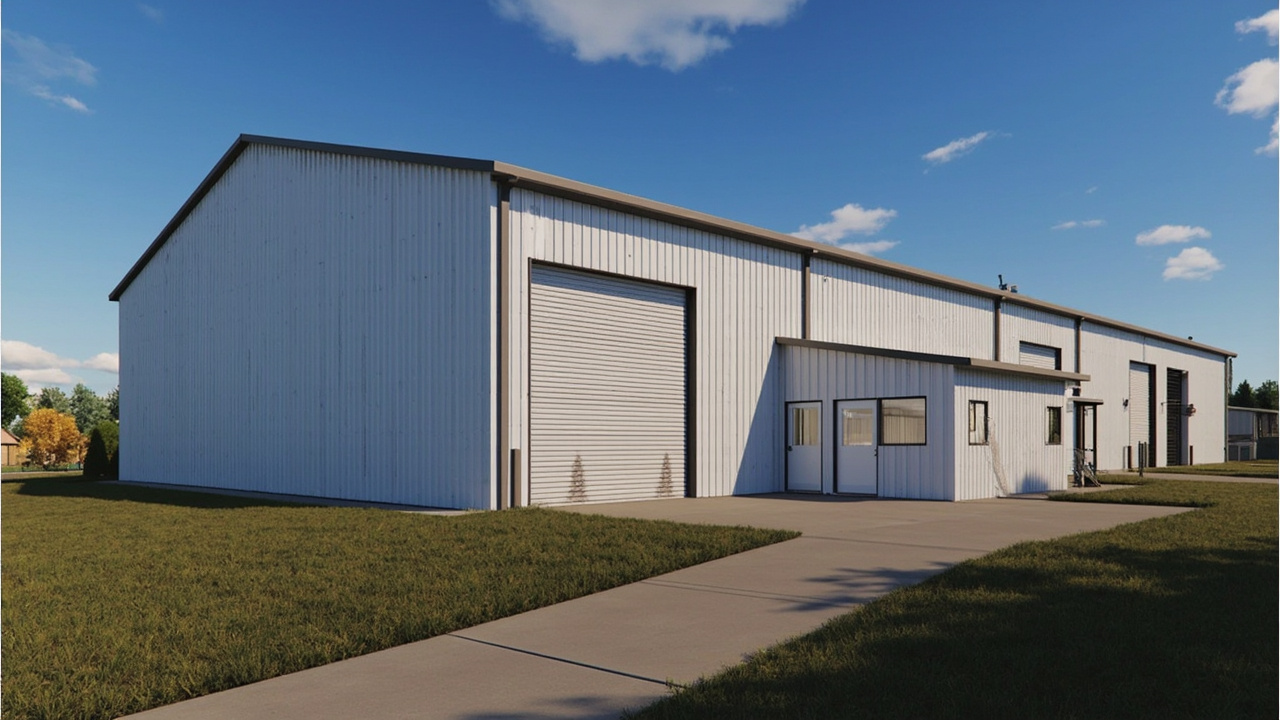


A £3.3m loan from Paragon Bank’s Development Finance division will support Litton Properties’ work on a seven-unit trade park in Markham Vale, Derbyshire. It is the lender’s first completed transaction since introducing a dedicated light industrial offering earlier this year.
- The development comprises 31,264 sq ft of trade park accommodation.
- Its units are intended for trade counters, suppliers and logistics occupiers.
- Practical completion is expected in Q2 2027.
- Each unit is designed for an EPC A rating and BREEAM “Very Good” accreditation.
- Solar panels and electric vehicle charging points are included among the planned features.
A first deal with a specific focus
At £3.3m, this is a compact financing rather than a large institutional commitment. Its value to Paragon lies in proving how its new proposition works in practice: backing an established developer to create smaller commercial units where occupier demand is already visible.
Paragon said strong occupational demand and a shortage of good-quality space attracted it to the sector. The Markham Vale transaction puts that thesis under scrutiny. While the wider market has shown sustained appetite for smaller logistics and trade counter premises, a successful loan still depends on how the individual units perform once they are ready for occupation.
Litton brings relevant experience to the scheme. Since 1995, the company has concentrated on industrial and logistics development and operations. For Paragon, that background and the established Markham Vale location provide useful foundations when considering the borrower, the project and its likely tenant base.
An established location for new space
Markham Vale is already home to more than 70 occupiers, including Great Bear, Bilstein Group and Smurfit Westrock. The development has also produced more than 2,700 jobs so far.
That gives the proposed trade park an established commercial setting rather than requiring it to create demand from scratch. Litton’s Mark Twelves said the destination’s location and transport connections have helped it attract a broad occupier mix, with continuing demand for good-quality employment space in the region.
An existing occupier base does not automatically translate into lettings for every new unit. It does suggest that Litton is adding space to a location already known to certain businesses. The size and intended uses of the seven units will therefore need to match the requirements of buyers and tenants operating at a smaller scale.
What makes light industrial different
These developments occupy a space between large logistics warehouses and smaller commercial units. Their occupiers may need a customer-facing counter, storage, local supply or distribution facilities, often without the floorplate found in a major distribution centre.
Demand for premises of this kind has remained relatively steady in recent years. Conditions have not been uniform across every part of the UK property market, however, and rental trends continue to differ between sectors. Paragon is betting that specialist developers can keep meeting occupier requirements by building compact, well-located units.
The planned specification strengthens the proposition. An EPC A design, BREEAM “Very Good” accreditation, solar panels and vehicle charging points may make the units more attractive to occupiers with environmental or operating-cost priorities. Their commercial value still depends on what tenants will pay and whether those savings or credentials alter leasing decisions.
Decision checklist: questions for the next project
The Markham Vale deal offers a useful model for assessing smaller trade park lending:
- Developer capability:** Is there enough evidence that the borrower can manage design, construction and delivery through to completion?
- Location credentials:** Does the site already have an identifiable occupier base, or is demand being assumed without supporting evidence?
- Tenant mix:** Which business types could occupy the units, and how many potential tenants exist for each type?
- Rent levels:** Are the projections based on comparable local evidence and the accommodation actually being offered?
- Letting exposure:** What happens to income and debt service if some units remain empty longer than expected?
- Specification value:** Do the environmental features influence demand, or are they simply extra costs unless reflected in tenant offers?
- Completion risk:** Can construction still meet the planned date if costs or contractor availability change?
- Exit flexibility:** What options exist for the completed development if sales, refinancing or continued occupation do not proceed as planned?
These questions distinguish the likely winners and losers within the proposition. Litton gains funding to expand an established estate. Paragon gains a completed-deal reference for its new service, should the project perform as intended. Future borrowers may benefit from greater access to finance, although competition among lenders should help keep terms under pressure. For lenders and investors, the trade-off remains clear: established demand can reduce leasing uncertainty, but it cannot replace project-level analysis.
Why this matters
This transaction represents a meaningful step for Paragon because it moves beyond announcing a lending strategy and into demonstrating actual deployment. It also offers a template for what the bank appears willing to fund: an experienced developer, a recognised commercial location and a relatively small scheme designed around several potential occupier types.
Neal Moy, managing director of Paragon Development Finance, said the proposition was created for experienced developers operating in a segment with strong long-term opportunities. That strategy will gain credibility only if Paragon can deliver the Markham Vale project successfully and repeat the experience with suitable borrowers.
The development still carries familiar risks. Construction must reach the Q2 2027 completion target, costs must remain manageable and the units must secure occupiers at sustainable rents. A project can have a strong location and a credible developer while still facing difficult economics if letting takes longer than planned.
What to watch next
Two developments will shape the deal’s significance. The first is progress against the practical completion schedule. The second is leasing: the businesses that take space, the rent agreed and the structure of their commitments.
For Litton, successful occupation would add new premises for trade counters, suppliers and logistics users within an established destination. For Paragon, a well-executed and let project could validate the approach behind its first completed light industrial deal. More broadly, the scheme will show whether current occupier appetite for compact industrial space can continue to support new development finance.
Key takeaways
- Paragon’s £3.3m facility backs Litton Properties’ seven-unit Markham Vale trade park and marks the lender’s first completed light industrial deal.
- The project pairs an experienced developer with an established occupier base, but each unit will still need to find a suitable tenant.
- Delivery against the Q2 2027 target and the level of leasing achieved will determine whether the transaction strengthens Paragon’s new proposition.
- Environmental features can support demand, although they do not replace proper analysis of rents, vacancy and debt service.
Frequently asked questions
What is light industrial property?
It usually covers smaller logistics and commercial premises used for activities such as trade counters, storage, supply and local distribution.
Why has Paragon entered this market?
The bank identified strong occupier demand and a limited supply of quality premises as reasons for launching its light industrial lending proposition.
When is the Markham Vale trade park due to finish?
Practical completion is scheduled for Q2 2027.
Who is funding the project?
Paragon Bank’s Development Finance division is providing a £3.3m facility to Litton Properties.
What are the main risks?
Important considerations include construction delays, changes in costs, slower lettings, vacancy and the rental and debt-service assumptions underpinning the development.