



















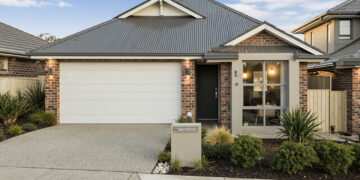



Berkadia closed the sale of Aster at Sun Prairie, a 228-unit multifamily property in the Madison, Wisconsin metro area, to Kirkland, Washington-based Weidner Apartment Homes. The seller is Menomonee Falls, Wisconsin-based Continental Properties. The transaction was led by Senior Managing Director Pete Evans from Berkadia's Chicago office and Senior Director Richard Evans from the Milwaukee office.
- 228-unit multifamily property in Sun Prairie, Wisconsin
- Built in 2018 across 12 buildings at 650 Springs Street
- Buyer: Weidner Apartment Homes (Kirkland, WA)
- Seller: Continental Properties (Menomonee Falls, WI)
- Transaction led by Berkadia's Chicago and Milwaukee offices
- All units feature direct-access entry
- Located near American Family Insurance headquarters and UW Health's East Side Medical Campus
- Includes clubhouse, pool, fitness center, and one-to-one garage parking
Asset Profile
Built in 2018, the property consists of 12 buildings at 650 Springs Street in Sun Prairie, a community east of Madison. All units offer direct-access entry, creating a house-like living experience in a walkable suburban setting. Residents have proximity to grocery, restaurants, and major retailers.
Amenities include a luxury clubhouse with swimming pool and fitness center, plus one-to-one garage parking. The asset's location on Madison's rapidly expanding east side places it near American Family Insurance headquarters, American Center Business Park, and UW Health's East Side Medical Campus.
The property was formerly known as Springs at Sun Prairie before being rebranded as Aster at Sun Prairie.
Market Context
The Madison metro has seen steady population and employment growth over the past decade, driven by its diverse economy anchored by insurance, healthcare, and technology sectors. Sun Prairie, in particular, has emerged as one of the fastest-growing communities in Wisconsin.
For institutional investors, secondary markets like Madison offer potential advantages over saturated gateway cities. Cap rate compression in primary markets has pushed some investors to seek yield in metros with stronger income growth potential. Suburban multifamily assets with employer adjacency often provide occupancy stability that supports acquisition pricing.
Why This Matters
The transaction signals that institutional capital continues flowing into suburban multifamily assets in growing secondary metros. Weidner Apartment Homes, a known acquirer of suburban garden-style properties, is betting on continued demand from renters seeking space and affordability relative to urban cores.
For readers tracking capital flows between commercial sectors, this sale reinforces a pattern: institutional investors favor assets near major employment anchors. American Family Insurance's headquarters creates a built-in tenant base of white-collar workers seeking proximate housing. That employment linkage reduces leasing risk during market downturns.
The one-to-one garage parking ratio stands out. In markets where parking shortages constrain occupancy, the ability to offer every unit an attached garage commands a premium. Combined with direct-access entries, this property targets renters who want single-family living without ownership obligations.
Not every investor wins here. Smaller private buyers competing for similar assets in the Madison metro face stiff institutional competition. Pricing discipline matters more than ever in markets where institutional buyers can accept lower yields to secure scale.
Practical Takeaway
Say you are evaluating a suburban multifamily acquisition in a growing metro. Properties near major employment anchors like insurance headquarters or medical campuses typically command occupancy premiums. At Aster, the combination of direct-access units, strong amenities, and employer adjacency supports the valuation level achieved.
When underwriting similar assets, apply conservative occupancy assumptions during your base case and stress test scenarios with reduced rental income. In Sun Prairie's market, a conservative assumption with moderate rent growth assumptions produces reasonable levered returns over a multi-year hold. The garage parking adds monthly ancillary revenue that improves cash flow margins.
Pay close attention to the difference between gross and net operating income assumptions. Amenity-heavy properties like Aster carry higher maintenance and replacement reserves. Budget appropriately for capital expenditures on clubhouse and fitness center equipment.
What to Watch Next
Watch whether Weidner Apartment Homes implements value-add initiatives at the property or maintains its current operating model. The Madison metro's expansion trajectory will influence whether additional institutional transactions follow. Comparable sales data from similar suburban assets will clarify whether per-unit pricing in this transaction reflects a new floor or a cyclical peak.
Key takeaways
- Institutional investors remain active in secondary multifamily markets with strong employment fundamentals
- Suburban assets with employer adjacency and functional amenities command premium valuations
- One-to-one garage parking provides ancillary revenue and occupancy stability
- Smaller private buyers face structural disadvantages when competing against institutional capital in growing metros
- Underwriting discipline matters more when institutional buyers set market pricing
Frequently asked questions
Who bought Aster at Sun Prairie?
Kirkland, Washington-based Weidner Apartment Homes acquired the property from Continental Properties through a brokered transaction led by Berkadia.
Who led the transaction for Berkadia?
Senior Managing Director Pete Evans from the Chicago office and Senior Director Richard Evans from the Milwaukee office managed the sale.
Where is the property located?
The asset sits at 650 Springs Street in Sun Prairie, Wisconsin, a growing suburb on the east side of the Madison metropolitan area.
What makes this transaction notable for investors?
The sale demonstrates continued institutional appetite for suburban multifamily in secondary metros with diversified employment bases, a market segment that has attracted less cap rate compression than coastal gateway cities.
What should readers watch next?
Monitor whether Weidner Apartment Homes pursues rent increases or property upgrades at Aster, which will signal expectations for Madison metro multifamily performance.