


















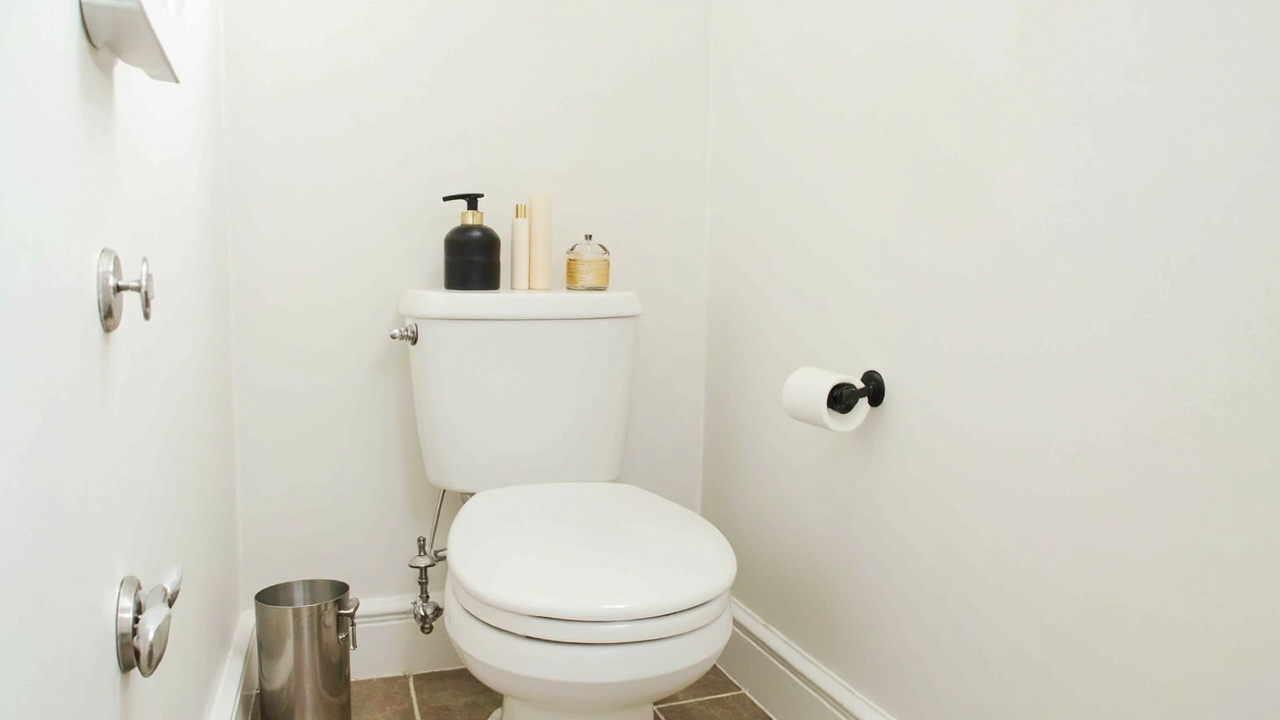

A 2020-built condo powder room that its owner called "boring" has been transformed into what she describes as "a little jewel box" for $3,155, according to a project completed as part of the One Room Challenge and documented on Apartment Therapy.
The renovation leaned on first-time DIY wainscoting, professionally installed wallpaper, and aggressively sourced fixtures. The dollar-by-dollar breakdown carries a useful lesson about how to allocate limited budgets in small spaces where every decision is visible.
Christina Fowler's bathroom shipped with the problem most 2020-era condos share: modern fittings, neutral palette, zero personality. Her plan was to add traditional detail on top of the existing bones—no demolition needed.
First came wainscoting. Fowler had never installed moulding before and worked from an online tutorial, taping the picture-frame design on the wall first to reduce cut mistakes. She used a miter box saw rather than an electric mitre saw, partly because of space constraints and partly to save money; the box saw cost $17 versus several hundred for the electric model.
She painted the moulding in Benjamin Moore's "Hale Navy," then had pimpernel ink-patterned wallpaper professionally installed above it. The colour choice flipped mid-project: she had originally planned white moulding, switched to navy once the wallpaper pattern was in front of her.
The rest was a mix of second-hand sourcing and small purchases. The mirror came from Facebook Marketplace, treated with Rub 'n Buff for an antique gold finish. The faucet was an eBay purchase at roughly half retail. New framing, painted with acrylics, completed the look.
What it cost
| Category | Spend | Approach |
|---|---|---|
| Wallpaper (installed) | High | Hired out |
| Wainscoting (materials + tools) | Moderate | DIY |
| Light fixture | Low | New |
| Mirror | Low | Second-hand + refinished |
| Faucet | Low | Discounted new |
| Artwork | Minimal | DIY paint |
The full redo came in at $3,155 all-in. The allocation tells the real story: capital went toward the elements that dominate the room—the wall detail and the wallpaper—while fixtures and frames were deliberately minimized. That's the opposite of how most people approach small-room budgets, and it works.
Why this matters
Fowler pushed spend into the elements that read loudly and stripped cost out of the elements that don't. The mirror, faucet, and framing account for a tiny fraction of the total; the wainscoting and wallpaper carry the room.
For commercial property, the equivalent move is the spec suite or the shared washroom. These rooms set the tone for everything else. Smart landlords spend on the fixtures, finishes and lighting that a viewer photographs—not on the plumbing behind the wall. The same logic—premium on perceived quality, discount on functional hardware—earns rent premia without blowing capex.
A caveat: DIY moulding, second-hand mirrors and acrylic-painted frames work for an owner-occupier with time to spare. In a commercial context, the labour mix shifts: you hire finishers, spec new fixtures, and still buy premium on the things the camera captures.
Material costs are the swing variable in any small-room redo. Moulding, wallpaper and fixtures can all run 20-40% over budget if a unit goes wrong. Watch for sticky inflation in decorative finishes even as commodity fixtures stay flat.
Bottom line: spend on what the camera sees, source smart on what it doesn't, and never underestimate what a single bold wall does to a small space.
Who should care
Condo owners:** A targeted redo in a high-visibility half-bath gives disproportionate visual return. Focus budget on wall finish and lighting; minimize fixtures and framing.
Property managers:** Spec-suite washrooms and shared amenities carry the first-impression load. Apply the same logic—premium on the photographed elements, discount on functional hardware—to justify capex and attract quality tenants.
Design enthusiasts:** Fowler's first-time wainscoting proves you don't need advanced skills or expensive tools. The $17 miter box saw and an online tutorial delivered professional-adjacent results.
Key takeaways
- A $3,155 powder room redo leaned on DIY wainscoting and second-hand sourcing to inject character.
- The high-spend items were wall detail and wallpaper; the cost-cut items were fixtures and frames.
- For any small, visible space, the same allocation logic—premium on perception, discount on function—applies.
Frequently asked questions
How much did the powder room renovation cost?
The total was $3,155, including moulding, wallpaper, fixtures and finishing details, per the project documentation.
What was the main DIY element?
Wainscoting. The owner installed picture-frame moulding herself for the first time, using a tutorial and a $17 miter box saw.
What was hired out?
The pimpernel ink-patterned wallpaper above the wainscoting was professionally installed.
Which finishes were sourced second-hand?
The mirror, bought on Facebook Marketplace and finished with Rub 'n Buff, and the faucet, bought on eBay at roughly half retail.
What's the lesson for small-space budgets?
Spend heavily on the elements that dominate the room—wall detail, wallpaper, lighting—and minimize spend on elements that don't read loudly. This allocation delivers maximum visual impact per dollar spent.

