

















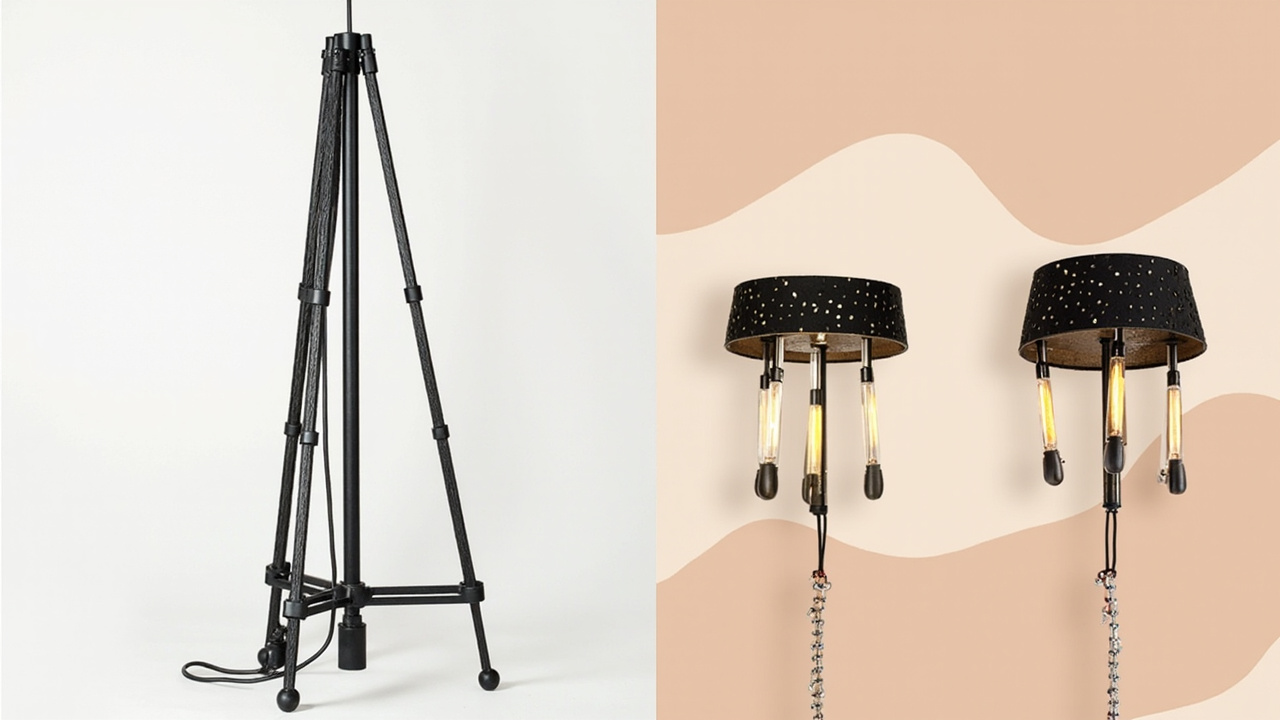

A roundup from apartmenttherapy.com spotlights eleven outdoor lighting options sold through Harbor Freight, with prices running from $8 to $50. The list leans heavily on solar-powered and rechargeable designs, the kind of gear that skips hardwiring and runs without an outlet.
Most picks come from the Luminar Outdoor line, with two outliers: a combined lantern and bug zapper for camping, and a three-in-one rechargeable lantern, fan and power bank. The cheapest item is an $8 solar LED lantern with a bronze finish, while the priciest is a $50 set of color-changing string lights. Several items are multi-packs, which pulls the per-light cost down considerably.
What happened
- Eleven outdoor lighting products featured, prices from $8 to $50
- Most options are solar-powered or rechargeable, no wiring required
- The lineup spans garden accents, path lights, string lights, and security fixtures
- Cheapest item: $8 bronze solar LED lantern
- Priciest item: $50 color-changing LED string lights
- Two non-lighting crossover items: a lantern/bug zapper and a lantern/fan/power bank
What the lineup actually covers
Walk the list and a pattern shows up. Solar dominates. Of the eleven products, nine run on sunlight: pathway lights, garden stake lights, a wall-mount security light, fence puck lights, a spotlight, and the two lanterns. Two are rechargeable plug-in units aimed more at camping than the backyard.
Function follows form in a pretty predictable way. Decorative stake lights (butterflies, hummingbird, dragonfly) sell for the least, because they are small novelty items. Path lights and in-ground disks cost a bit more but come in packs of four or ten. String lights sit at the top of the price ladder because of length, bulb count, and remote-control circuitry. None of the items in the roundup require an electrician, which is the whole pitch.
Why this matters
Lighting is one of those line items that quietly bloats a renovation budget. Big-box solar alternatives strip out the labor and most of the hardware cost, which is why the category has eaten so much share over the past decade or so.
The trade-off is durability and output. Cheap solar panels fade after a couple of seasons, and the integrated batteries lose capacity faster than the panels do. Brightness, measured in lumens, is modest across the board. The security fixture in the roundup puts out 115 lumens, the spotlight 40 lumens, and the path lights are not listed with a lumen figure at all. That is plenty for marking a walkway. It is not enough to light a parking lot.
For anyone comparing these to a hardwired system, the math is straightforward. Pay $20 to $50 for a multi-pack of solar stakes and replace them every few years, or pay a much larger sum once for a low-voltage system that lasts far longer. The solar route wins on upfront cost and DIY ease. It loses on consistency and light quality.
A practical example
Say you have just closed on a rental property and want to light the front walkway and the back patio before the first tenant moves in. A $20 ten-pack of solar path lights covers the walkway, and a $25 set of Edison-style string lights handles the patio overhead. That is $45 of inventory, zero electrician time, and the lights are ungrounded so there is nothing for a tenant to fiddle with or a code inspector to flag. Add a $15 wall-mount solar security light by the side gate and the whole exterior is done for a low total spend. The same scope with hardwired low-voltage would likely run into the thousands once trenching and a transformer are factored in. The catch: if a panel clouds over for two nights in a row, output drops. For a rental, that is usually fine. For a restaurant patio that depends on evening ambience, it is a real risk.
What to watch next
Keep an eye on three things if you are shopping this category. First, battery chemistry is shifting; newer lithium-ion cells hold a charge longer than the older NiMH packs, and they show up in the higher-priced items in this list. Second, lumen counts are climbing as LED efficiency improves, so a $15 light bought this year will likely outshine an identical-looking $15 light from three years ago. Third, watch for IP ratings if you see a newer version of any of these products. An IP44 or IP67 rating tells you how well the fixture handles rain and dust, and it is the single best predictor of how many winters the light will survive.
Bottom line: the roundup is a reasonable starting point for landlords, renters, and casual DIYers. Skip it if you need reliable, high-output lighting for a commercial property or a hospitality venue.
Key takeaways
- Solar and rechargeable fixtures remove the electrician from the budget, at the cost of brightness and lifespan
- Multi-packs of path or stake lights bring the per-unit cost down to a few dollars
- Match the product to the use case: decorative for gardens, higher-output fixtures for security and task lighting
Frequently asked questions
What is the cheapest outdoor light featured in the roundup?
The cheapest is a solar LED lantern with a bronze finish at $8.
Are any of the lights hardwired?
No. Every item in the roundup is either solar-powered or rechargeable, so no wiring or outlets are required.
What is the most expensive item on the list?
The priciest item is a 24-foot set of color-changing, remote-controlled LED string lights at $50.
Can these lights handle commercial or hospitality use?
They are built for residential backyards, gardens, and camping. Output and durability are modest, so they are not a substitute for commercial-grade lighting.
How long do cheap solar lights typically last?
Most consumer solar lights run a few seasons before panel clouding and battery wear start to dim the output noticeably.

