





















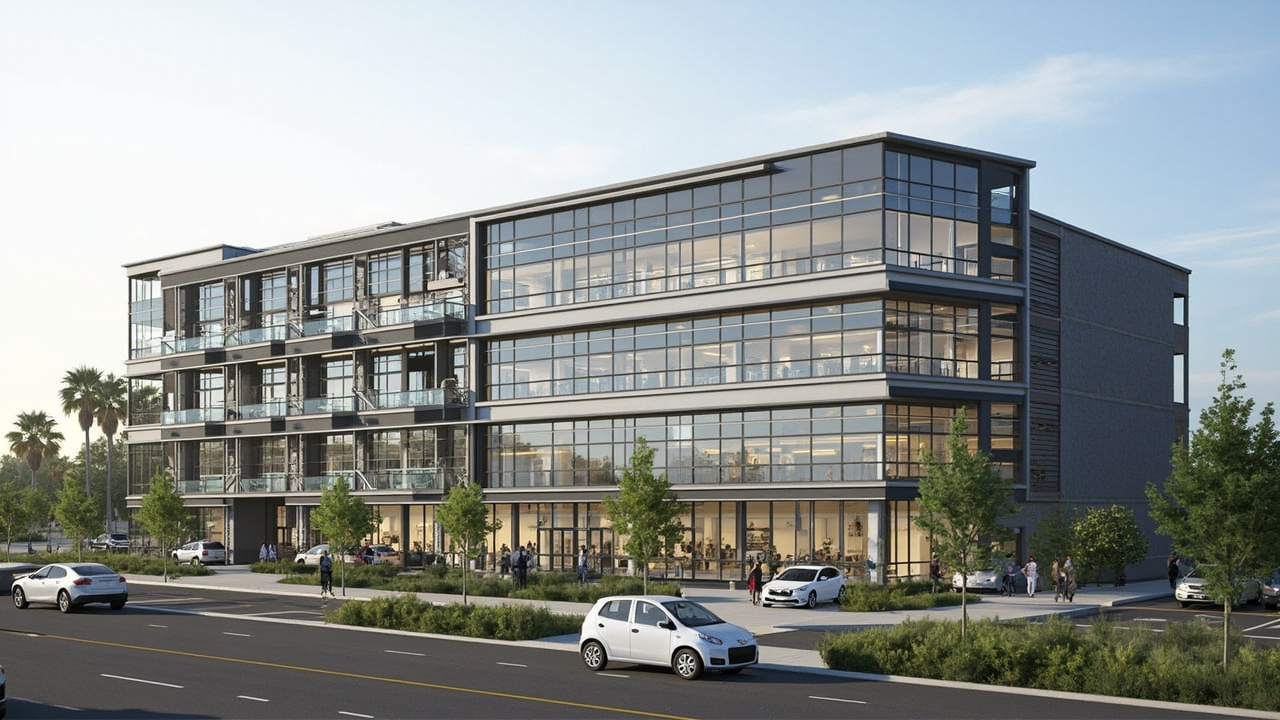

A joint venture between Breakthrough Properties and Tishman Speyer has placed a $90 million mezzanine bridge loan on Aperture Del Mar, a 538,000-square-foot life science campus in San Diego fully leased to Neurocrine Biosciences, according to Connect Commercial Real Estate. The borrower, Gemdale USA, is using the proceeds to refinance an existing loan. The deal is a useful read on where capital is positioning in life science real estate right now.
The short version:
- Loan size: $90 million, structured as mezzanine bridge debt.
- Asset: Aperture Del Mar, a four-building, 538,000-square-foot Class A life science campus in Del Mar Heights.
- Tenant: Neurocrine Biosciences, with a lease running through 2036.
- Use of proceeds: refinance of an existing loan held by Gemdale USA.
The asset, in plain terms
Aperture Del Mar is the kind of product life science tenants pay up for. It is a fully occupied, four-building lab-and-office campus in Del Mar Heights, anchored by a single tenant running the site as its global headquarters through 2036. Single-tenant, mission-critical, long WALT. That is the profile lenders want on a mezzanine stack.
The borrower is Gemdale USA, the US arm of a Chinese real estate group, refinancing out an existing loan. Mezzanine bridge structures typically sit behind a senior mortgage, so this is likely the piece of the capital stack below a senior lender, not the whole debt package.
Why the sponsors matter
The joint venture pairing is the more interesting part. Breakthrough Properties is itself a joint venture of Tishman Speyer and Bellco Capital, and this loan sits inside its second life science fund, which held its first close at the end of 2025. Tishman Speyer participated through its recently established debt platform. So one sponsor is putting in equity through a fund, the other is putting in debt through a new lending arm, and the asset is a property type both know well.
San Diego is a core life science cluster, and Breakthrough already holds several properties in the area. The familiarity shows up in the willingness to write a $90 million mezzanine check on a single-tenant campus.
Our analysis
The deal is a transaction and a signal. As a transaction, it is a clean refi of a stabilised life science asset at a time when the life science sector is past its 2021 peak and into a more selective phase. As a signal, it shows that well-capitalised sponsors are still willing to back top-tier lab product with long WALT and credit tenants, even when the broader sector is softer.
The mezzanine structure matters too. It sits behind senior debt and takes more risk in exchange for higher coupons. Sponsors willing to write mezz on life science product are underwriting the tenant, the location, and the residual value of a Class A campus more than the cycle.
What it means for you
For investors tracking life science real estate, the read is that capital is concentrating in credit-tenant, long-WALT product in established clusters. Generic lab space in second-tier markets is still under pressure. The winners are the assets with names like Neurocrine attached and leases that run into the mid-2030s.
For brokers and lenders, the deal is a marker that sponsor-backed debt platforms are active in the space. Expect more of this kind of structured refi through 2026 as older loans mature.
A worked example
Say you are underwriting a hypothetical life science campus with a single credit-rated tenant and a lease stretching well into the 2030s in a top cluster. Senior debt from a balance-sheet lender is achievable at a tight spread given the WALT. A mezzanine lender can then come in behind that senior piece at a wider spread, with sponsor equity filling the rest. The structure works because the tenant and the long lease do most of the heavy lifting on credit and exit assumptions.
What to watch next
Watch senior debt pricing on Class A life science product, since spreads set the floor for any mezzanine piece stacked on top. Watch lease renewal activity at Neurocrine's peers, since that drives refi demand across the sector. And watch the next fund close from Breakthrough, since fund size will signal how much dry powder is heading into life science real estate over the next cycle.
Key takeaways
- $90M mezzanine bridge loan refinances a 538,000-square-foot life science campus in San Diego.
- Tenant Neurocrine Biosciences is locked in through 2036, anchoring the deal.
- Capital is concentrating in credit-tenant, long-WALT life science product in established clusters.
Frequently asked questions
What is Aperture Del Mar?
A 538,000-square-foot, four-building Class A life science campus in Del Mar Heights, San Diego, fully leased to Neurocrine Biosciences.
Who lent the $90 million?
Breakthrough Properties and Tishman Speyer through a joint investment, with Tishman Speyer participating via its debt platform.
Why is the loan structured as mezzanine?
Mezzanine debt sits behind a senior mortgage and earns a higher coupon in exchange for the additional risk. It is a common way to refi stabilised assets without diluting sponsor equity.
Does this deal signal a broader life science recovery?
Not broadly. It signals that top-tier, single-tenant, long-WALT product in core clusters remains financeable. Generic lab space is still under pressure.

