





















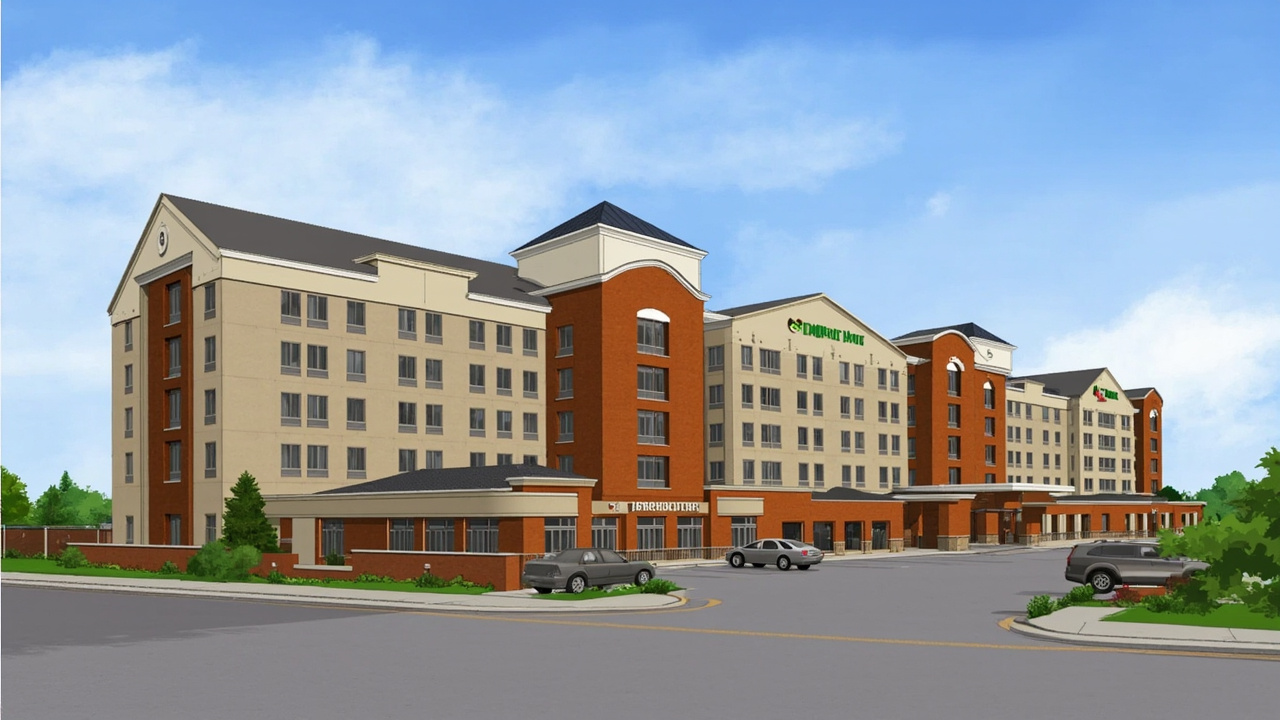


A boutique hotel transaction in northern Minnesota has caught our eye—not because of its size, but because of what it reveals about where capital is currently hunting for yield in the hospitality sector. Marcus & Millichap brokered the sale of a 45-room Country Inn & Suites in Detroit Lakes, Minnesota, according to published deal reports. The property traded between a local seller and a South Dakota-based buyer, continuing a pattern of cross-state investment activity in secondary and tertiary hospitality markets.
Why Recreation Markets Still Draw Capital
The Detroit Lakes deal sits at an interesting intersection: limited-service hospitality and outdoor recreation demand. Built in 1996 on 1.73 acres at 1330 U.S. Highway 10, the property has cycled through renovations and now changes hands under new ownership that plans to maintain the Country Inn & Suites flag. The area's tourism credentials are solid—access to Detroit Lake, Detroit Mountain Recreation Area, the Heartland State Trail, and over 400 lakes within 25 miles create a demand base anchored in regional recreation rather than a single season.
For hotel investors, recreation-adjacent assets in smaller markets offer structural advantages. Average daily rates can compress below urban equivalents, but so do acquisition costs and operating overhead. The buyer—a South Dakota-based party operating outside the immediate market—appears to be betting that the property's reputation and location can sustain performance without requiring active ownership presence.
Our Analysis: Reading the Market Signal
The deal involved Marcus & Millichap's Minneapolis team—Joseph Ferguson, Jon Ruzicka, Reed Gizinski, and Brock Banken—marketing the asset on behalf of DL Hotel Group LLC. The involvement of a dedicated hospitality broker with regional coverage suggests the seller was seeking qualified buyers, even in a market that won't make national headlines.
What should investors take from this? Secondary market hotel transactions are trading at cap rates that remain competitive relative to core urban assets, particularly for limited-service properties where labor intensity and renovation cycles are manageable. The Country Inn & Suites brand positioning—mid-market, functional, oriented toward leisure travelers—aligns with demand patterns centered on regional tourism and outdoor recreation.
That said, small-format hotels carry specific risks. Dependence on a handful of demand generators means any disruption—local economic downturn, natural disaster, or shift in regional tourism patterns—hits harder than in diversified urban markets. The buyer will need disciplined revenue management and tight cost controls to deliver acceptable returns on a 45-room asset.
Who Should Care
| Investor Type | Relevance |
|---|---|
| Individual investors / small funds | 45-room format trades at accessible price points vs. Large full-service assets |
| Regional operators | Cross-state buyer pattern suggests active market participation beyond local capital |
| Anyone underweight secondary markets | Deal serves as a useful benchmark for cap rate expectations in recreation corridors |
What to Watch Next
The next few quarters will test whether secondary market hotel valuations hold or correct as interest rate dynamics continue influencing cap rate expectations across commercial real estate. Watch for comparable transaction volume in upper Midwest recreation markets—Minnesota, Wisconsin, and Michigan's Upper Peninsula—to gauge whether capital remains comfortable with this asset class and geography.
Bottom line:** The Detroit Lakes Country Inn sale is a data point, not a trend declaration. But it confirms that investor appetite for well-located, recreation-driven hospitality assets in smaller markets hasn't cooled. If you're underweight this segment, the deal is worth using as a benchmark.
Key takeaways
- Recreation-adjacent hotels in secondary markets continue attracting regional capital at competitive cap rates.
- Limited-service formats offer lower operational complexity but higher sensitivity to local demand shocks.
- Cross-state buyer activity in small-market hospitality suggests investors are casting wider geographic nets.
- Brand continuity (Country Inn & Suites flag) reduces execution risk compared to conversion or re-flag scenarios.
Frequently asked questions
What makes a hotel investment in a recreation market different from an urban property?
Urban hotels typically depend on corporate travel, conventions, and business traffic, while recreation-market properties rely on leisure demand, which tends to be more stable but seasonally concentrated. Acquisition costs and operating expenses are generally lower in secondary markets, but so is potential upside.
Why did a South Dakota-based buyer purchase a Minnesota hotel?
Cross-state buyers often target markets with stronger demand fundamentals than their home territory. Detroit Lakes offers year-round outdoor recreation appeal that may exceed what's available in South Dakota, making the investment attractive despite the distance.
What does "limited-service" hotel mean for investors?
Limited-service properties typically lack full-service amenities like restaurants, room service, or extensive concierge offerings. They have lower operating costs and higher labor efficiency, making them attractive for investors prioritizing stable cash flow over premium rate potential.
Is a 45-room hotel a viable investment for a smaller investor?
Yes. Smaller format hotels trade at price points accessible to individual investors or small funds, unlike large full-service assets that require institutional capital. The Detroit Lakes deal demonstrates active market participation for these asset sizes.
What should I look for when evaluating a hotel near outdoor recreation destinations?
Focus on proximity to year-round demand drivers, recent renovation status, brand affiliation, and local competition density. Properties near multiple attractions with strong digital review profiles tend to perform more consistently across seasons.