




















Mickleham, about 30 kilometres north of Melbourne's CBD, has gone from a quiet outer suburb to one of Australia's most closely watched growth corridors. The suburb's population was 3,145 in 2016 and is now estimated at 30,091, with forecasts pointing to 60,996 by 2046. The numbers, drawn from reporting on the suburb's rapid expansion, underline how quickly the outer-north is absorbing demand that the inner city can no longer house.
Affordability gets most of the headlines, but the buyers turning up are also shopping for amenity. According to the developer behind the area's flagship project, what sets the corridor apart is the combination of schools, shops, parks and transport wrapped into a single master-planned footprint.
At a glance
- Mickleham's population was 3,145 in 2016 and is estimated at 30,091 today, with a 2046 forecast of 60,996.
- The suburb sits roughly 30 kilometres north of the Melbourne CBD.
- Merrifield, a master-planned mixed-use community, is already home to almost 10,000 residents.
- On completion, Merrifield is planned to encompass more than 8,500 homes, 25,000 residents, three schools, a sub-regional shopping centre, over 120 hectares of open space and a $1.2 billion industrial precinct.
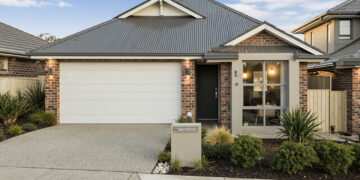
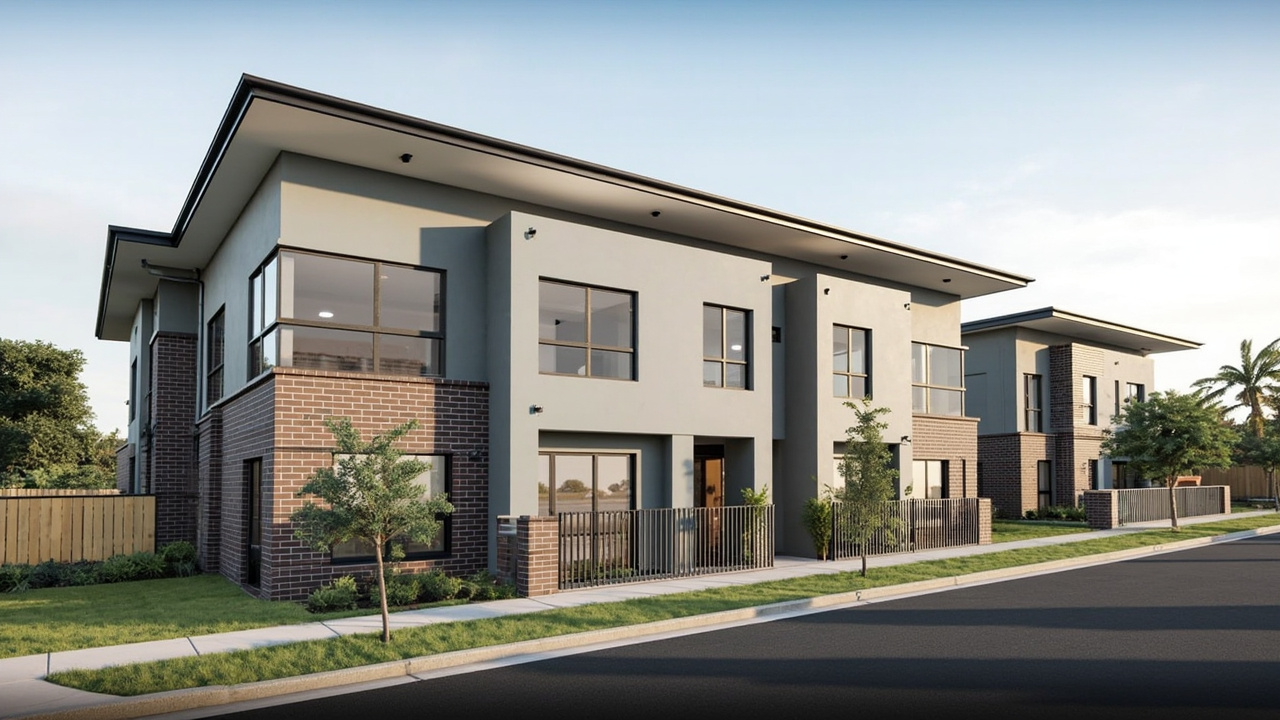
- Merrifield's new townhouse precinct Hollington Quarter released its first stage of 74 homes, with two-bedroom, two-bathroom townhouses starting from $474,900.
How the suburb got here
Mickleham's trajectory follows a familiar outer-Melbourne pattern: cheap land, greenfield titles and a single large developer willing to build the supporting infrastructure before the rooftops arrive. Merrifield is Victoria's largest master-planned, mixed-use community, and its first two stages are already complete. Merrifield City, the town centre, includes a supermarket, fresh food, cafes, health services, childcare, a swim school and office space.
The next phase of retail is slated for construction to begin in 2027, with plans for a new lifestyle and homemaker centre. That timing matters. Pipeline retail tells you the developer is still betting on more buyers, not pulling back.
Our analysis
For investors who read the residential market as a leading indicator for the broader property cycle, Mickleham is a useful case study. Outer-north corridors like this one tend to behave differently from established infill suburbs. They trade on affordability, land availability and developer-led amenity delivery, not on rent growth driven by employment density or transport upgrades.
That cuts both ways. The 2046 population forecast of 60,996 implies continued household formation, which supports medium-term housing demand. But the same growth depends on infrastructure arriving on schedule, on jobs following the rooftops, and on interest-rate conditions not derailing the buyer pool that has driven the run.
Read it through a commercial lens and a few patterns stand out:
- Industrial co-location. A $1.2 billion industrial precinct inside the masterplan means logistics and light-industrial tenants are being courted alongside residents. That mix can stabilise land values through cycles when pure-residential demand wobbles.
- Retail catch-up. With construction of the next retail stage not starting until 2027, the catchment is still under-served. Sub-regional shopping centre yields in fast-growing corridors tend to compress early, which is worth flagging for anyone tracking Melbourne retail property investment.
- Townhouse pivot. The Hollington Quarter launch of 74 dwellings shows the developer responding to a maturing buyer mix, including downsizers who do not want a greenfield house but still want a new build.
A worked example
Say you are a buyer weighing a two-bedroom townhouse at Hollington Quarter from $474,900 against a comparable established townhouse closer to the Melbourne CBD at, say, $650,000. The price gap is roughly $175,000. On a typical 30-year mortgage at current rates, that difference can shave hundreds of dollars off monthly repayments, which is exactly the calculation pulling first-home buyers and downsizers to the outer north.
The trade-off is the commute, the early-stage amenity offering and exposure to further developer-led supply. A prudent buyer would check the staging timeline, the walkable distance to Merrifield City, and whether the next retail phase has a firm go-ahead before committing.
What to watch next
Watch three things. First, population data from the next census release to see if the 30,091 estimate holds up. Second, the 2027 retail construction start at Merrifield, which is the test of whether the developer is still in expansion mode. Third, the pricing trajectory of townhouse product in greenfield estates. If Hollington Quarter and its peers hold their entry-level price points while the broader Melbourne market cools, that confirms the outer-north affordability premium is widening, not narrowing.
Frequently asked questions
How fast is Mickleham's population growing?
According to the reported data, Mickleham's population was 3,145 in 2016, is estimated at 30,091 today, and is forecast to reach 60,996 by 2046.
What is Merrifield and how big will it get?
Merrifield is a master-planned, mixed-use community described as Victoria's largest. On completion it is planned to include more than 8,500 homes, 25,000 residents, three schools, a sub-regional shopping centre, over 120 hectares of open space and a $1.2 billion industrial precinct.
How much do townhouses at Hollington Quarter cost?
The reported starting price for a two-bedroom, two-bathroom townhouse at Hollington Quarter's first stage is $474,900.
When does the next Merrifield retail stage start?
According to the reporting, construction on the next retail stages at Merrifield City, including a planned lifestyle and homemaker centre, is anticipated to commence in 2027.
Why are buyers choosing outer-north Melbourne suburbs like Mickleham?
The suburb's reported drawcards are affordability, local amenities, transport options, community living and a range of housing types within a master-planned setting.