



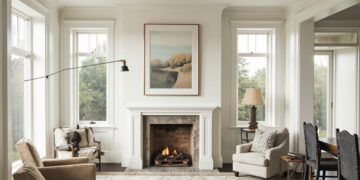














Singapore's public housing market has a quiet quirk: a handful of flat layouts built before 1995 that the Housing and Development Board stopped producing once the Executive Condominium scheme launched. These layouts, including Executive Maisonettes, Executive Apartments, and Multi-Generation flats, give you space, dual-storey living, or dual-key configurations that modern HDB stock rarely matches.
A recent Stacked Homes curation surfaced five units above 1,700 sq ft. For investors who understand how Singapore's residential stack works, those numbers matter. Larger HDB flats trade on a different scarcity dynamic than ECs, and the right comparables are not always what you'd expect.
- Pre-1995 HDB layouts include Executive Maisonettes, Executive Apartments, and Multi-Generation flats.
- All five featured listings exceed 1,700 sq ft, a footprint rarely matched in newer HDB stock.
- Asking prices spanned $1,050,000 to $1,650,000 in the curated set.
- TOP years range from 1984 to 1993, putting remaining lease on investors' radar.
- Locations span Clementi, Bishan, Pasir Ris, Yishun, and Sin Ming across multiple MRT lines.
Why the pre-1995 cohort is its own asset class
Two features separate these flats from standard HDB supply. First, they were built for households that sat above the standard income ceiling but below private condo affordability, a deliberate bridge product. Second, the layouts often include dual-storey living, large terraces, or a secondary studio annex. Supply is fixed because no new cohort will be built.
That scarcity is why investors in this market often anchor pricing not to recent HDB transactions but to small-format ECs or older boutique condos. The price-per-square-foot gap between the largest curated unit (2,045 sq ft in Pasir Ris) and the smallest (1,722 sq ft in Sin Ming) reflects location and configuration as much as raw size.
Our analysis
Three investor considerations stand out. First, lease decay. These flats were built between 1984 and 1993, so a buyer today is taking on aged lease. That's acceptable for owner-occupation, restrictive for next-generation resale. Second, layout optionality. Dual-key and Multi-Generation formats rent as multi-generational units more easily than standard flats, which can support yield. Third, MRT adjacency. Two of the featured units sit near operational or upcoming MRT stations, including the future Maju station on the Cross Island Line, which historically supports price resilience.
The trade-off is straightforward: limited upside from lease decay on the next resale, but stable demand from upgraders priced out of the private market who want space rather than address.
Worked example: underwriting a Multi-Generation flat
Say you're comparing two units. One is a standard four-room Bishan flat. The other is the 1,776 sq ft Bishan Multi-Generation unit at $894.64 PSF. On raw dollars the larger unit costs considerably more. But the larger unit can rent to a multi-generational household at a premium to a standard flat, and the dual-key configuration lets you hold one room for staff or a tenant while the main unit stays whole.
Run the rent yield both ways. If the larger unit clears a meaningful premium to a comparable four-room, the gap narrows over a five-year hold. Combine that with the upgrade floor, households priced out of nearby private condos, and the case improves. None of this changes the lease arithmetic. Whatever lease remains at purchase is what you pass on.
Bottom line
Large HDB flats above 1,700 sq ft are a niche within a niche. They reward investors who understand the dual-key and maisonette layouts and who can stomach an aging lease. For the right buyer, the PSF premium versus smaller HDB stock is modest in some cases, with Sin Ming clearing the highest PSF in the set at $958.19 and Yishun the lowest at $594.90.
Key takeaways
- Pre-1995 HDB layouts are a closed cohort, which supports scarcity pricing.
- Asking PSF in this curated set ranged from $594.90 to $958.19 across five towns.
- Lease decay is the main long-term constraint for capital appreciation.
- Dual-key and maisonette configurations can lift achievable rent versus standard flats.
Frequently asked questions
What types of large HDB flats were built before 1995?
Executive Maisonettes, Executive Apartments, and Multi-Generation flats. The Executive Condominium scheme launched in 1995, after which HDB largely stopped building these bridge layouts.
How rare are flats above 1,700 sq ft in the HDB stock?
Rare. Standard HDB flats typically peak well below 1,700 sq ft. The pre-1995 cohort includes some of the only HDB units at or above that threshold.
Are large HDB flats a good investment given lease decay?
They can be, primarily as a yield play with multi-generational or dual-key tenants. Capital appreciation is constrained by lease remaining, so resale math matters.
What should investors check before buying one of these flats?
Remaining lease, MRT adjacency, layout configuration (dual-key, maisonette, terrace), and recent PSF for similar pre-1995 units in the same town.

