




















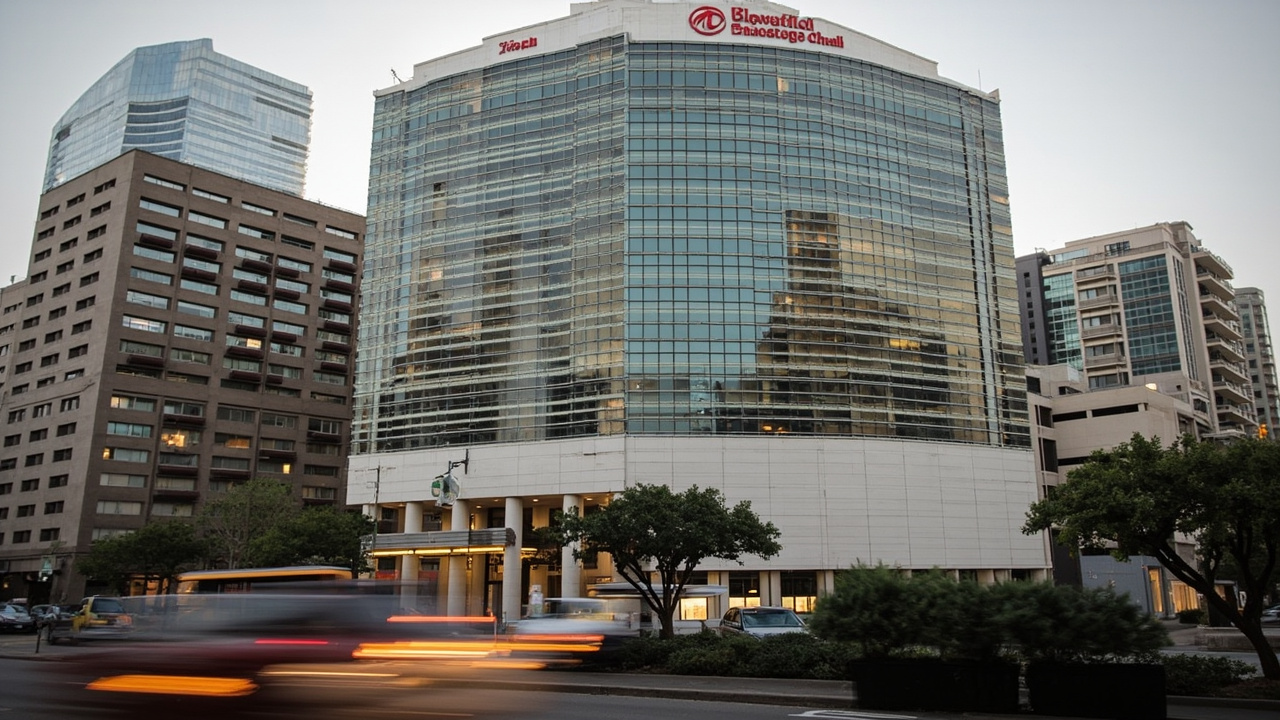

Hilton-branded hotels are carrying the highest commercial mortgage-backed securities delinquency rate among major hotel chains, according to analysis by KBRA reported by Bisnow. Nearly 16 percent of all CMBS debt tied to Hilton properties is now delinquent, more than double the overall hotel market average.
The distress reflects ongoing struggles at large urban assets that have failed to recover from pandemic-era disruptions to business and leisure travel.
At a Glance
- Hilton accounts for roughly $15.9 billion in securitized hotel debt, with about $2.5 billion delinquent
- Marriott's CMBS hotel debt stands at $23.2 billion, but only $1.6 billion is delinquent, a 7 percent rate
- Hyatt's delinquency rate is 2.8 percent, the lowest among the three
- Hilton's revenue per available room grew just 0.4 percent last year, trailing competitors
Concentrated Pain in Gateway Cities
The damage is not spread evenly. Two San Francisco hotels alone account for roughly $725 million in delinquent CMBS debt. Hilton Union Square and Parc 55, a combined portfolio of nearly 3,000 rooms, saw their former owner Park Hotels & Resorts surrender the keys to lenders in 2023. The assets later sold for $408 million, a steep haircut from the debt they carried.
Chicago's Palmer House Hilton, a 1,641-room landmark, has been tangled in foreclosure and litigation for years. Servicing commentary indicates the loan was declared unrecoverable, and interest advances have stopped.
Our Analysis
Hilton's asset-light franchise model keeps the brand itself profitable even as individual owners bleed. That split is worth watching. When franchisees exit or hand back keys, it raises questions about brand value, RevPAR growth, and whether lenders will tighten underwriting on future Hilton franchise deals.
The concentration in San Francisco and Chicago also highlights that not all urban hotel markets are equal. Business travel recovery has been uneven, and secondary business destinations with dense convention activity face different dynamics than gateway cities dependent on corporate transient demand.
For CMBS bondholders, the Hilton situation highlights how large, iconic assets can drag on pools for years without resolution.
What It Means for You
If you hold hotel CMBS exposure, stress-test your holdings against RevPAR trajectories in your specific markets. A generic "hotel sector" allocation may mask concentrated downside in downtown cores.
Say you are underwriting a boutique hotel in a secondary market. Benchmark your revenue assumptions against Hilton's national RevPAR growth of 0.4 percent rather than the industry average. That conservatism could be the difference between a deal that pencils and one that does not.
Bottom Line
Hilton's CMBS distress rate stands at nearly 16 percent, double the hotel market average. The problems are concentrated in a handful of large urban assets, and the brand's own RevPAR performance lags competitors. Lenders and bondholders should watch whether this is a contained urban problem or signals broader franchise model strain.
Key takeaways
- Hilton's 16% CMBS delinquency rate is the highest among major hotel flags and more than double the market average
- San Francisco and Chicago account for the bulk of distressed Hilton CMBS debt
- Hilton's asset-light model shields the brand but leaves owners exposed to weak urban RevPAR recovery
- Investors in hotel CMBS should stress-test concentrated exposures in downtown business markets
Frequently asked questions
Which hotel chain has the highest CMBS delinquency rate?
Hilton, with nearly 16 percent of its securitized debt tied to branded hotels in delinquency, according to KBRA analysis reported by Bisnow.
How much Hilton CMBS debt is delinquent?
Of roughly $15.9 billion in total Hilton securitized hotel debt, approximately $2.5 billion is delinquent.
Which specific properties are driving the distress?
Hilton Union Square and Parc 55 in San Francisco account for about $725 million in delinquent debt, and Chicago's Palmer House Hilton has been in foreclosure proceedings for years.
How does Hilton's performance compare to competitors?
Hilton's revenue per available room grew just 0.4 percent last year, trailing Marriott, Hyatt, and IHG.

